AUTHENTIC SHIRTING & KURTA FABRICS
From Yarn to Finished Fabric: Understanding the Textile Manufacturing Process
The journey from yarn to finished fabric is a fascinating blend of science, craftsmanship, and advanced technology. In today’s competitive textile industry, understanding the textile manufacturing process is essential for businesses that demand durability, consistency, and premium quality fabrics.
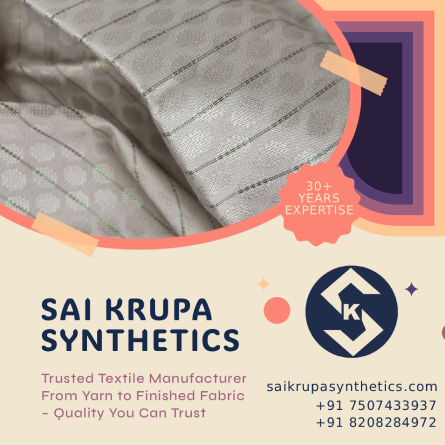
At Sai Krupa Synthetics, a trusted textile manufacturer in Mumbai, every stage of production is handled with precision and care. From selecting high-grade yarn to applying advanced textile finishing techniques, each step plays a vital role in creating superior fabrics for diverse industries.
In this comprehensive guide, we’ll walk you through the complete yarn to fabric process, the critical textile production steps, and how advanced machinery and strict quality control ensure exceptional results.
Step 1: Fiber & Yarn Selection
The textile manufacturing process begins with selecting the right fibers and yarns. This step determines the strength, texture, appearance, and durability of the final fabric.
Understanding Fiber Types
Fibers can be broadly categorized into:
- Natural Fibers – Cotton, wool, silk
- Synthetic Fibers – Polyester, nylon, acrylic
- Blended Fibers – Combination of natural and synthetic materials
For synthetic-focused manufacturers like Sai Krupa Synthetics, polyester and blended yarns are often preferred for their strength, elasticity, and resistance to wrinkles and shrinkage.
Yarn Formation Process
Before weaving or knitting begins, fibers are converted into yarn through:
- Spinning
- Twisting
- Winding
The yarn’s thickness, twist level, and tensile strength are carefully controlled. A high-quality yarn ensures uniformity during the fabric weaving process and minimizes defects later.
Why Yarn Quality Matters
Poor-quality yarn can lead to:
- Fabric breakage
- Uneven dye absorption
- Weak tensile strength
- Surface irregularities
That’s why top textile mill operations in Mumbai emphasize stringent raw material inspection before production begins.
Recent Post
Step 2: Weaving & Knitting Process
Once the yarn is prepared, the next stage in the yarn to fabric process is converting it into fabric through weaving or knitting.
Fabric Weaving Process
Weaving involves interlacing two sets of yarn:
- Warp (lengthwise yarn)
- Weft (crosswise yarn)
The warp yarns are stretched tightly on a loom, and the weft yarns pass over and under them. This creates structured fabrics used in:
- Industrial textiles
- Upholstery
- Garments
- Technical applications
Modern textile mill operations in Mumbai use automated looms that increase speed, reduce waste, and ensure consistent fabric density.
Knitting Process
Knitting differs from weaving by forming interlocking loops of yarn. It produces flexible, stretchable fabrics commonly used in:
- Sportswear
- T-shirts
- Innerwear
- Activewear
Advanced Machinery in Weaving & Knitting
High-speed looms and computerized knitting machines:
- Improve production efficiency
- Reduce yarn breakage
- Ensure precise patterns
- Maintain uniform tension
This stage is crucial because structural defects at this point can compromise the entire textile production process.
Step 3: Dyeing & Fabric Finishing
After weaving or knitting, the fabric is still raw and unfinished. The next phase involves the fabric dyeing process and specialized textile finishing techniques.
Fabric Dyeing Process
Dyeing adds color and character to the fabric. This step requires careful chemical control to ensure:
- Uniform color penetration
- Colorfastness
- Resistance to fading
- Minimal environmental impact
Dyeing methods include:
- Batch dyeing
- Continuous dyeing
- Reactive dyeing
- Disperse dyeing (for synthetic fibers)
In modern textile mill operations in Mumbai, eco-friendly dyeing methods are increasingly adopted to reduce water consumption and chemical waste.
Textile Finishing Techniques
Finishing enhances the look and performance of the fabric. Some common textile finishing techniques include:
- Heat setting – Stabilizes synthetic fabrics
- Waterproof coating – Adds moisture resistance
- Wrinkle resistance treatment
- Softening treatments
- Anti-static finishing
Finishing determines how the fabric feels, behaves, and performs in real-world fabric applications.
Quality Control by a Textile Manufacturer in Mumbai
Quality control is not a single step it is an ongoing process throughout textile production steps.
Inspection at Every Stage
A reliable textile manufacturer in Mumbai performs checks at:
- Yarn stage
- Weaving/knitting stage
- Dyeing stage
- Final finishing stage
Testing Parameters Include:
- Tensile strength
- Shrinkage resistance
- Colorfastness
- GSM (grams per square meter)
- Dimensional stability
Advanced laboratories test fabrics under various conditions to ensure they meet international standards.
This strict monitoring ensures that clients receive defect-free, durable, and performance-driven fabrics.
Importance of Advanced Machinery in Fabric Production
Technology plays a major role in the journey from yarn to finished fabric. Modern textile production steps rely heavily on automation and digital monitoring systems.
Benefits of Advanced Machinery
- Increased production speed
- Lower material waste
- Higher accuracy
- Reduced manual errors
- Consistent fabric quality
Automated systems monitor tension, temperature, and humidity, which are critical factors in synthetic fabric manufacturing.
Why It Matters for Buyers
Businesses sourcing fabrics need:
- Bulk consistency
- Timely delivery
- Reliable specifications
- Competitive pricing
Only well-equipped textile mill operations in Mumbai can meet these expectations at scale.
Why Sai Krupa Synthetics Ensures Premium Fabric Quality
When it comes to delivering excellence in the yarn to fabric process, Sai Krupa Synthetics stands out as a trusted textile manufacturer in Mumbai.
What Sets Them Apart?
- ✔High-grade synthetic yarn selection
- ✔ Advanced weaving & knitting infrastructure
- ✔ Precision dyeing and finishing
- ✔ Strict quality control systems
- ✔ Timely bulk production capability
- ✔ Industry-compliant standards
Sai Krupa Synthetics combines expertise, technology, and experience to provide fabrics that meet modern industry demands.
From industrial textiles to commercial applications, their production model ensures:
- Durability
- Color consistency
- Structural integrity
- Cost-effectiveness
If you're looking for a reliable partner in textile manufacturing, now is the time to make the right choice.
Conclusion
Understanding the journey from yarn to finished fabric gives businesses greater clarity about fabric quality, durability, and performance. Each stage fiber selection, weaving, dyeing, finishing, and quality control plays a crucial role in delivering premium textiles.
The textile manufacturing process is not just about machines it’s about precision, expertise, and commitment to excellence.
Sai Krupa Synthetics ensures that every step in the textile production steps is handled with advanced technology and strict supervision. That’s how premium synthetic fabrics are created consistently and efficiently.
If you’re sourcing high-quality fabrics from a reliable textile manufacturer in Mumbai, choose expertise, innovation, and proven quality.
👉 Visit now: https://saikrupasynthetics.com/